Rash on a Dog's Head - What to Do, Causes of Rashes, Treatment
Dermatological diseases are not only common in humans. This phenomenon has become widespread among our four-legged friends as well.
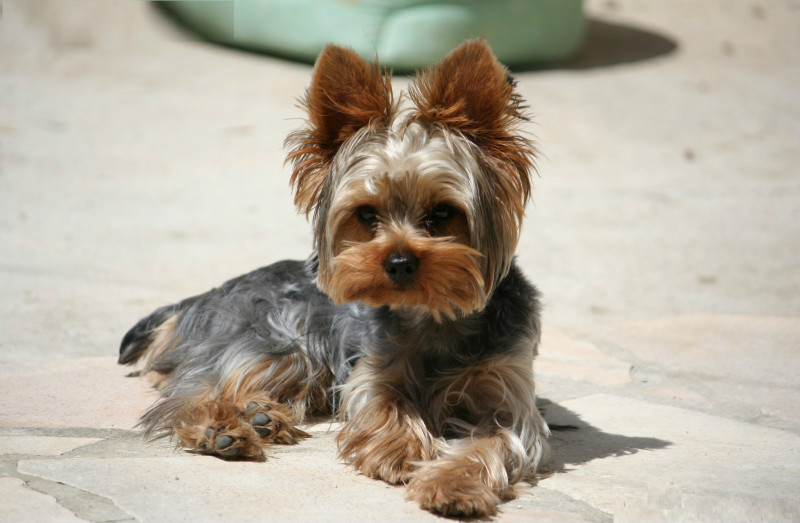
Dermatological Issues in Yorkshire Terriers
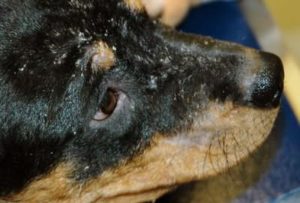
Dermatological diseases are not exclusive to humans. This phenomenon has become widespread among our four-legged friends as well. Skin rashes are most often observed in the area of the head and neck, where the skin comes into contact with the collar. Rashes, irritations, and small pimples also form in skin folds, on the belly, back, and groin area.
Ignoring rashes can lead to the development of eczema and more severe inflammation of the skin. Therefore, it is important to understand the nature of the rashes and promptly begin treatment.
Pimples and Rashes on a Dog's Head

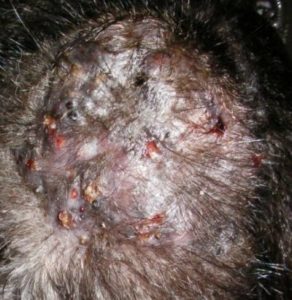
The appearance of pimples on the head begins with swelling. The dog owner may not always identify the inflamed area, especially when the swelling occurs without changes in the skin color. As the swelling increases in size, it leads to the development of small densifications that accumulate in hair follicles. The pimples on the back of the head resemble acne.
If bacteria enter the follicle cavity, they quickly multiply, filling the voids with pus. Pustular pimples on a dog's head become noticeable and start causing discomfort to the animal.
To prevent the condition from affecting significant areas of the epidermis, the dog owner must promptly detect the initial symptoms. Since any rash, especially with purulent content, indicates the development of an inflammatory process in the dog's body.
There are several reasons why pustules appear on the head of a pet:

- Hormonal changes. All puppies and young animals are subject to hormonal changes. During the period of maturation and transition to adolescence, dogs may develop rashes on the head, ears, and muzzle. After the "adolescent stage," the rash usually disappears on its own.
- Breed characteristics. Pimples in breeds like Shar Peis, Bulldogs, Mastiffs, and Pugs tend to form in skin folds characteristic of the breed. A favorable environment for bacterial growth in these folds promotes their multiplication.
- Friction from the collar. Irritations, especially in the summer. In hot weather, little oxygen reaches under the collar, causing sweat to appear on the skin. This creates an excellent breeding ground for microorganisms.
- Allergic reactions. Small pimples are considered primary symptoms of an allergy. Therefore, if a dog is predisposed to react to external stimuli, rashes will become a common occurrence.
- Demodectic mange. When small pimples appear on the head, the disease quickly progresses, covering the dog's body with a rash of bumps on the ears, lips, and then throughout the body. Delaying treatment is unacceptable.
- Ringworm. Fungal microorganisms that enter the dog's body cause dermatophytosis, known as ringworm. The disease starts with small rashes and, if left untreated, ends with the animal's hair loss.
- Pyoderma. The disease is caused by staphylococcal and streptococcal microorganisms. Pustular pimples on the head and all over the body are symptoms of an immunodeficiency disease.
The appearance of any rashes or swellings around the head should prompt a visit to the veterinarian. They will determine the nature of the disease and prescribe appropriate treatment.
For preventive purposes, the owner should take care of the dog's hygiene. The head, muzzle, and the entire body should be clean and dry. For breeds with deep skin folds, facial hygiene should be doubled.