Dog's teeth decay: what to do, how to treat, causes
Every pet owner decides for themselves whether to visit a veterinarian monthly or to examine the pet themselves.
Diseases of Gums and Teeth in Dogs
The responsibility for the pet's health lies on the shoulders of the dog owner. Every owner of a four-legged friend decides for themselves how they will do this. Whether to visit the veterinarian monthly, take tests quarterly, or inspect their beloved pet themselves. Regardless of the choice, a dog needs to be examined to timely detect diseases and provide appropriate treatment.
A dog should be seen by a veterinarian specializing in dentistry twice a year. Our four-legged friends, like humans, need consultations with a specialist. Since dogs can have various dental problems. Thorough and constant oral hygiene is the first step to never wonder why a dog's teeth are decaying.
Diseases of Gums and Teeth in Dogs
The scale of dental problems in a pet becomes clear to the owner when they understand the types of dental diseases and their consequences.
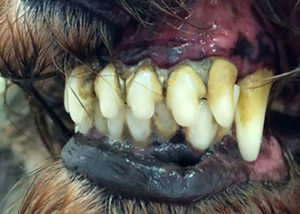
It is not uncommon for an animal to have a decaying tooth or pus flowing from the gums. This is a result of diseases such as:

- caries. Carious damage to a tooth is a consequence of bacterial penetration. Dental caries in dogs is characterized by damage to the outer layers of the tooth. Food, entering the cavities, starts to decay and triggers tooth decay. Infected rotten dental tissues should be completely removed. The sooner caries treatment is started, the greater the chance of saving the tooth.
- gingivitis. With this disease, the dog starts to have problems with the gums. The mucous membrane becomes inflamed, the gums become red and bleed. The pet's mouth starts to smell very unpleasant. Untreated gingivitis always leads to periodontitis.
- periodontitis. Inflamed tissues around the tooth, caused by untreated gingivitis, transform into a destructive process. Tissues and structures holding the tooth perish. When a dog shows the first or second stage of periodontitis, the oral cavity is cleaned, and the decayed tooth is removed. The third stage is characterized by the appearance of pus. Treatment involves total removal of all teeth.
- periostitis (flux). The inflammatory process starts in the periosteum. The disease develops rapidly. If not treated promptly, the pet may develop sepsis or lose a tooth. Acute purulent periostitis manifests as severe toothache and visible abscesses on the gums. In dogs, periostitis is always accompanied by the animal's general malaise, refusal of food and water. Treatment for flux in dogs involves incision of the abscess, antiseptic treatment, and drainage installation (if necessary). At home, the owner will need to rinse the oral cavity with herbal solutions (chamomile, calendula, oak bark).
- cyst. Pus-filled blisters on a dog's gums may indicate the presence of a cyst. A growth filled with purulent fluid slowly increases in size. Cyst formation often occurs against the background of other dental and oral cavity diseases. A cyst can be diagnosed independently, but for removal, a visit to a dog dentist is necessary.

Other Diseases of the Oral Cavity in Dogs
A dog's gums can be affected by:
- stomatitis. A growth may turn out to be not a cyst or tumor, but ulcerative stomatitis. If a dog has infected plaque on its teeth, in one hundred percent of cases, it will develop into stomatitis. Treatment involves frequent and thorough rinsing of the oral cavity with herbal decoctions or medical solutions. Furacilin, soda, Lugol's solution, chamomile, sage, and oak bark are excellent choices.
- insect bites. The bite site should be carefully examined. If stung by a wasp, the sting should be removed. Then try to reduce swelling by applying a solution of water and soda. Allergic dogs are recommended to take antihistamines. Make it a rule to visit a dog dentist with your dog, especially if you own small dog breeds or an elderly pet.