What is an abscess in dogs. Furuncles: treatment and prevention
Types of abscesses and their treatment. Localization of boils. Prevention and self-treatment of abscesses in dogs. READ MORE.
Page Content
What is an abscess in dogsHow a boil appears on a dog's pawBoils on a dog's body: causes, localizationNeckMuzzleTailHow to treat a dog's abscess on your ownOpen abscessVeterinary assistanceClosed abscessPrevention of abscesses Purulent boils in dogs appear in places of inflammation and open wounds. In most cases, they are dangerous to the pet's health, causing noticeable discomfort. Not all types of abscesses can be treated independently at home.
What is an abscess in dogs
This is called a large boil. It can be closed or open. The first is visible under the skin, possibly with a fistula. An open one regularly releases fluid and does not heal. Boils are dangerous because they open the way to various infections. The cause is bacteria, a foreign body, tissues unknown to the body. A purulent boil in a dog appears as follows:
- The body detects bacteria and tries to isolate it.
- Blood flow to the area increases, white blood cells try to destroy the pathogen.
- An isolating capsule forms under the skin at the site of localization.
- Pus is dead blood cells.
- If the immune system fails to resolve the issue, the boil continues to grow. Rupture of the capsule leads to the spread of pathogenic microorganisms through the bloodstream throughout the body. This can result in serious intoxication and illnesses. Therefore, boils should be taken seriously. Symptoms: swelling, locally increased temperature, pain syndrome. Dogs often encounter boils, some resolve on their own, while others cause discomfort and pain.
How a boil appears on a dog's paw
The paw pads come into contact with the ground, where there are splinters, sharp stones, as well as dirt and germs. Therefore, a boil on a dog's toe is a result of injury and subsequent infection. It is easy to notice as the pet starts to limp, become restless, and less active. Veterinarians recommend regularly inspecting the paws for abscesses and walking the pet where there are no sharp objects on the ground. Inflammation between a dog's toes appears in the same way. But it is harder to notice than on the paw pads. Note that swelling between the toes can be a sign of other illnesses. If the nature of the formation is unclear, it grows, does not differ in temperature from the rest of the body, is hard - additional examinations are needed.
Boils on a dog's body: causes, localization
Another common cause of abscesses is cited by veterinarians as bite wounds. If a pet was bitten while playing with another dog and you did not treat the area, a boil may appear. With serious open wounds, the risk of infection is much higher: the area is treated several times a day, bandaged, and internal therapy (antibiotics) is applied.
Neck
A boil on a dog's neck appears due to a tight or stiff collar. If heavy leather products with spikes or chains are suitable for large dogs, narrow soft models are chosen for Yorkshire Terriers. Also, for miniature breeds, a collar should not be attached to the neck leash: they have a delicate neck. It is better to use a harness that goes over the body (like a cat's).
Muzzle
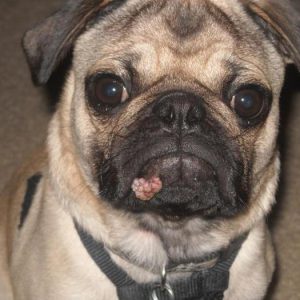
If a dog has a boil on its muzzle, caution is advised. It is located in close proximity to the brain, jaw, and large blood vessels. Sometimes a pet scratches its lip or cheek, introducing an infection while licking the wound. Such abscesses interfere with eating, pus gets on the mucous membranes, which can lead to spreading. Therefore, an abscess on the muzzle requires close attention and treatment.
Tail
A common place for boils. Firstly, some breeds have their tails docked. If the procedure is done in non-sterile conditions, there is a chance of a boil. Secondly, a dog may develop a boil on its tail due to active play or accidental injury. In any case, it should be examined and removed either independently or by a veterinarian.
How to treat a dog's abscess on your own
Treatment of a boil at home is carried out if you are sure it is a small boil. Closed abscesses should not be touched, pierced, or incised. All instruments and bandages must be sterile. The animal feels pain, so fixation is required. It is better to treat boils at home that have already opened.
Open abscess
It releases discharge - pus. As it is released, it is wiped with a clean bandage, the area is treated with a disinfectant. There is no need to squeeze out the contents, it comes out on its own. When clear fluid or serum appears from the wound, it can be allowed to heal. The area is also disinfected, and dressings with healing ointments are applied: Levomekol; Stellanin. If after several days pus is still coming out, the abscess is getting larger, and there is an unpleasant odor - consult a veterinarian.
Veterinary assistance
Treatment of abscesses in dogs at a clinic involves: Making small incisions in the abscess cavity. Installing drainage tubes. Pus exits through them. When the capsule decreases and contracts, it is treated with disinfectants and the incisions are sutured. Antibacterial therapy is always prescribed to prevent sepsis. The procedure takes from 3 to 10 days depending on the size of the abscess.
Closed abscess
Despite the many instructions on how to treat a boil at home, veterinarians do not recommend trying to get rid of deep closed abscesses on your own. Any incision is equated to surgery. Home conditions are not sterile, the necessary tools are not available, so it can only harm the pet. It is acceptable to monitor the growth of the abscess to understand when it will open on its own. Sometimes it can be heated with ointments like Vishnevsky, Liniment.
Prevention of abscesses
Some measures to reduce the likelihood of abscesses: Treat wounds, even minor ones. Bathe the dog. Maintain immunity. When a wound is healing, do not allow dirt and saliva to enter. Cover the area with a sterile bandage, put a cone or muzzle on the pet. Depending on the type of abscess, it may ripen in a few days or bother the pet for several months.