Ear mites (otodectosis) in dogs: symptoms and treatment
Ear mites are dangerous because they can cause infectious diseases in pets' ears and may even lead to hearing loss.
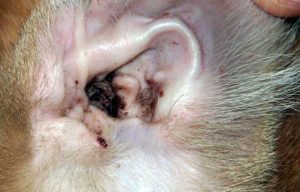
What an Ear Mite Looks Like on a Dog's Ears
 The parasite is a small arthropod, usually up to 1 mm in size. It enters the ear from the external environment or from infected animals. The young mite then attaches to the ear, feeds on lymph, and then burrows in the upper layer of the skin in search of food.
But the most dangerous stage for the pet is the reproduction stage. A fed mite lays eggs in the burrows, and later young ear mites emerge. The period is about a month. Veterinarians warn that in search of food, it can move to other parts of the body.
Therefore, otodectosis is a serious disease that is not only localized in the ear canals. It can be prevented by timely treatment and regular planned treatment of all furry pets in the house. Cats are especially susceptible to the parasite: they become a source of infection for dogs. Some flea drops also kill mites.
Main Symptoms of Otodectosis in Dogs
If preventive examination is not carried out, the obvious signs of ear mites in dogs are:
- frequent scratching of the ears, often to the point of bleeding;
- restlessness;
- head shaking, ear shaking;
- damage to the ear canal resembling otitis, but affecting both ears at once;
- characteristic brown dry crusts (on the inner surface). In severe cases, otodectosis causes blockage of the ear canal, as well as inflammation. These are accompanied by purulent discharge, fever. The process can spread to the eardrum, and then may affect the meninges. These are dangerous conditions for the dog's body, requiring immediate veterinary intervention.
Treatment of Ear Mites in Dogs with Medications
Any treatment for ear mites in dogs should be prescribed by a specialist, especially in cases of advanced infection. With minor infestations, you can handle it yourself. Make sure to treat puppies, even those obtained from a breeder. If your dog has ear mites, what to do:
- rinse the ear canals with hydrogen peroxide, preferably without inserting cotton swabs (pathogenic microflora multiplies in them);
- apply a special solution to the ear flaps;
- carry out preventive treatment of the pet and other animals to prevent recurrence. Also, treat against common ticks and fleas. Ear mites in dogs are successfully eliminated with drops such as Bars, Anandin, Atrazine, Otibiovine, and others. Apply the product to the affected areas, not just inside the ear flap. Carefully study the dosage and method of application. If the pet already has purulent discharge, consult a veterinary clinic. It may require a course of antibiotics and additional medications.
Ear Mites in Dogs: Home Treatment
Home remedies are used against ear mites in dogs. It is better to avoid this method, as you cannot predict the individual reaction of the pet to the remedy. Also, tinctures are said to be ineffective and require a long course of therapy. During this time of inactivity, the disease can reach the meninges, and the dog may lose its hearing or damage the eardrum. But if you do not have drops on hand or a veterinary pharmacy nearby, you can use 2 home remedies: Green tea infusion. Steep 2 tsp of green tea leaves in a cup of boiling water. Let it brew, then instill 4-5 drops in each ear for 1-1.5 months; in mild cases, rinse the ear flap with a moistened cotton pad. After cleaning, apply almond oil and rub it in the ears. Garlic oil. Add half a clove to 2 tbsp of oil. Let it infuse, then rub the ear flap with the resulting product once a day. Note that garlic is not only a powerful antiseptic but also an allergen. Young individuals up to 4 months old are more susceptible to the disease. They often get otodectosis from their mother or other animals. As preventive measures, do not allow your dog to closely interact with stray or sick animals. When treating, it is better to use approved medical products.