Why the dog limps
It doesn't matter if a dog limps on a front paw or a back paw. This indicates the presence of problems that cause discomfort to the animal.
Page Content
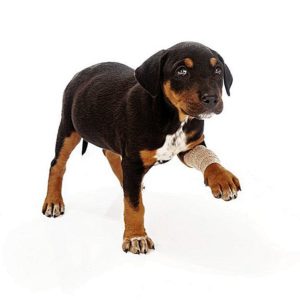
What to Do If Your Dog Cuts a Paw
Injuries to paws accompany a dog throughout its life, especially if it is walked in potentially dangerous places. These can often be cuts, calluses, or cracks. Signs of a minor injury:

- the dog does not put weight on the paw, holds it close to the body;
- the pet limps;
- constantly licks the paw pads;
- reacts to touch, as there is tenderness. Bloodstains on the floor or bedding may also be noticed. A cut on the paw is unpleasant only because it slightly restricts the dog's movements. With a shallow wound, it is possible to deal with it even at home. Steps to take:
- Rinse the wound with water. Then treat it with a small amount of hydrogen peroxide.
- Check for foreign bodies.
- If present, carefully remove them.
- If the wound is clean and not deep, apply a healing ointment.
- Let it dry.
- Cover with a sterile bandage. Repeat daily until healed. If there is a scratch on the paw pad or sole, treating it once every few days is sufficient. When going outside, be sure to cover the wound with a fabric bandage to prevent dirt and dust from getting in.
The Dog's Paws Have Failed: What Disease Is It?
Initially, the symptoms are not very noticeable: gait disturbances, intermittent lameness. Many owners attribute this to weather sensitivity, as with humans. However, in dogs, this indicates the development of limb problems. What causes a dog's hind legs to fail:

- spinal injury;
- intervertebral disc pathologies;
- arthritis of the joints;
- tumor;
- spinal pathology.
Injury
Usually, this is a serious fall or accident. Pets that have been hit by a car, bitten in a fight, etc., may experience limb failure. In such cases, the dog experiences pain, cannot move its legs, and "drags" them behind. The condition is accompanied by difficulties in meeting its needs.
Intervertebral Disc Pathologies
Small breeds and dogs with skeletal proportions disorders are prone to this condition. For example, dachshunds. The disease manifests at a relatively young age from 3 to 8 years old. The condition develops gradually, simply not making itself known. Before paralysis, the pet may be restless and in pain, and by evening the hind legs will fail.
Arthritis
A common joint disease in dogs. It occurs due to improper nutrition, excess weight, infections, etc. If the disease has progressed to limb failure, urgent veterinary attention is required, and home remedies should not be used for treatment.
Spinal Pathology
Associated with nerve structure disorders in the thoracic and lumbar regions. This causes difficulties in walking, and in the final stages, paralysis. Distinguishing between disc pathologies and spinal pathologies is impossible without the help of a specialist. It develops for various reasons.
Tumor
Malignant or benign neoplasms in the spine compress the corresponding nerves, limiting or completely depriving mobility. Perhaps any tumor in the spine is dangerous and requires immediate intervention. If the oncology is malignant, radiation or chemotherapy is added. Surgical intervention in the spine is dangerous, but if the veterinarian insists, it is necessary to take the risk. Otherwise, as the tumor grows, it poses a threat to breathing. Therefore, even minor signs of mobility problems are a reason to examine the dog for injuries and conduct additional tests. Timely treatment in some cases helps to avoid paralysis.
What to Do When Your Dog Loses Its Paws
First and foremost, it is necessary to calm the pet and quickly head to the clinic. There, the vet will recommend tests, X-rays, ultrasounds. They also collect history: whether there have been injuries, if there is a genetic predisposition, how the animal is fed, etc. If the cause of paralysis is treatable, treatment is prescribed. However, it may happen that the pet will have to live with paralyzed limbs. This is not a death sentence. A dog without paws (front or hind) with proper care is no different from mobile counterparts. It will quickly adapt to moving without limbs or with a special device - an analog of a wheelchair, but for four-legged animals. However, the pet's owners must understand that they will need to pay more attention to its health, help it move, manage its needs (if there is complete lower body paralysis). They must come to terms with the fact that there is now a dog with special needs in the house and provide everything for its comfort and safety.