Why does a dog shed heavily: causes and treatment
The most well-known condition causing hair loss is considered to be ringworm. However, besides this group of ailments, there are also others with similar symptoms.
Excessive Hair Loss in Dogs Without Itching: Possible Diseases
How to Treat Hair Loss in Dogs
Many owners face the issue of their dog losing hair on its back. The most well-known disease causing baldness, itching, and discharge is ringworm. However, besides this group of ailments, there are other conditions with similar symptoms. Hair loss can also occur without any symptoms, indicating underlying issues.
What to Do If a Dog Is Itchy and Losing Hair
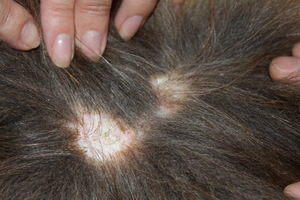
If a dog is itching and losing hair, it is likely due to fungal or bacterial skin diseases. They are grouped under dermatophytosis, of which there are several dozen types. Common signs include:

- Hair loss in patches;
- Itching;
- Rapid spread;
- Clustering of bald patches;
- Flaking;
- Slow or absent hair regrowth.
The affected skin may develop discharge, pustules, or a rash. Additionally, the epithelial structure changes: it becomes scaly, inflamed, or thinned. Untreated dermatophytosis progresses rapidly. The consequences are severe, leading to complete alopecia all over the body. The absence of a fur coat is critical for the pet.
Another group of diseases where a dog loses hair and has ailments are dermatitis. It can be allergic or atopic. Redness and a rash can be observed on the skin. Allergies to saliva and ectoparasite excreta often develop.
Atopic dermatitis has an unclear origin, appearing suddenly. The cause lies in the body's specific reaction to the trigger for unknown reasons. The atopic type is not always responsive to treatment, often achieving only persistent remission.
Hormonal imbalances in the animal's body also manifest with itching. Young and adult unsterilized females suffer from this. The most common areas affected are the abdomen and flanks. Hormonal imbalance also triggers tail alopecia in dogs.
Excessive Hair Loss in Dogs Without Itching: Possible Diseases
The absence of scabies indicates a different, non-fungal or bacterial nature of the condition:

- Cushing's syndrome.
- Adrenal diseases.
- Autoimmune processes.
- Hair growth pathologies.
- Stress.
Cushing's syndrome is an endocrine disorder where the adrenal glands produce excessive hormones. It is accompanied by specific symptoms, including skin calcinosis and alopecia.
Temporary adrenal issues also cause hair loss. If hair does not grow, but the health is otherwise fine, growth pathologies are possible. The diagnosis can only be clarified by a veterinarian dermatologist.
Pets can lose hair due to cruel treatment, fear, or an unfavorable home environment. Other symptoms include trembling, loss of appetite, hiding, avoiding interaction with owners and dogs, and lack of play. Small breeds are particularly sensitive to stress, as they cannot protect themselves independently.
How to Treat Hair Loss in Dogs
The treatment for a dog's hair loss depends on the progressing disease. Dermatophytosis is treated with special antifungal or antibacterial shampoos. Hair growth stimulants can also be used.
Fleas should be eliminated with drops or a collar. Allergic reactions are managed with antihistamines, but atopic dermatitis is more challenging to treat. Initially, the pet must be isolated from the trigger and avoid anaphylactic shock.
Specific diseases require special therapy prescribed only by a healthcare professional after thorough examinations. This may involve hormones, antibiotics, and medications to improve hair growth.