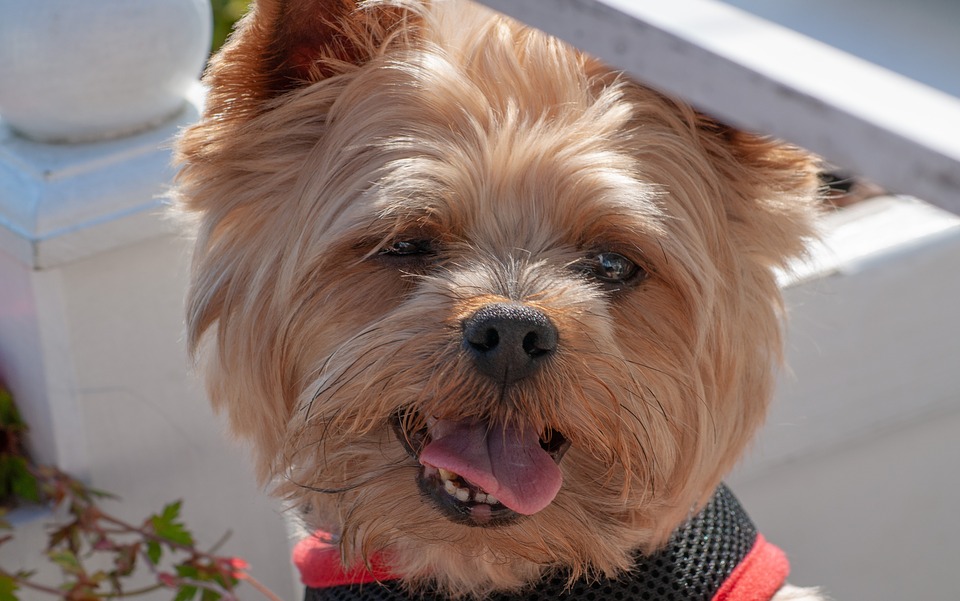
 About Breed
Breed standard and modern types of Yorkies: Miniature and Large Yorkies
Modern standard: mini, super-mini, and standard Yorkies. Care difficulties and defects in mini and micro Yorkies. Which Yorkie is better.

Breed Overview
Yorkshire Terrier Breed History
Bred in England by crossing various terrier breeds, Yorkshire Terriers were initially considered working dogs kept to combat rats and other rodents. Later, they were crossed with Maltese to obtain pets with beautiful and silky coats, weighing around 6-7 kg. Today, the breed has lost its practical use and is purely decorative. Suitable for indoor living due to their small size, Yorkshire Terriers are very friendly and loyal to their owners.
Yorkshire Terrier Breed Standard
The canonical types of Yorkshire Terriers were established back in 1898 and further supplemented in 2009:
- Long-haired dogs without an undercoat, allowing their hair to fall evenly.
- Compact and elegant build with a sturdy body.
- Small head without a prominent nose.
- Scissor bite.
- Ears standing erect and covered with hair.
- Straight legs, both front and back, standing upright, with correct and symmetrical shoulders.
- Tail can be docked or undocked. The undocked tail is carried as straight as possible, complementing the backline. Both options are considered acceptable. Varieties of Yorkshire Terriers exist only among breeders experimenting with the size of the pets. The standard accepted in the CIS countries in 1988 does not set a minimum weight limit, only establishing a maximum of 3.1 kg.
Breed Defects
Yorkshire Terriers that do not meet the breed standard may have:
- Semi-erect ears.
- Malocclusion or misalignment.
- Non-standard coloration.
- Cryptorchidism. Other defects include eyes that are too bulging or improperly set, structural defects in the legs, lack or alteration of teeth, short or long thick neck, and a low-set croup. Interestingly, underweight animals are not welcomed according to the canon.
Unofficial Yorkshire Terrier Standards
Officially, there are no distinctions within the breed based on size. All existing names like mini, micro, or dwarf pets are not confirmed by the breed standards. However, among breeders, the following types of Yorkies are distinguished:
- Standard.
- Mini.
- Micro or super-mini.
Large Standard Yorkshire Terrier Breed
These are the so-called big Yorkies, which are actually the optimal size for a small animal. Large Yorkshire Terriers weigh between 2 to 3.1 kg, striking a balance between size, classic appearance, and health. Dogs exceeding 3.1 kg are considered outside the breed standard and are not suitable for breeding purposes.
Miniature Yorkshire Terrier
Preferred by enthusiasts, potential buyers unfamiliar with official standards should research all information about these conditional variations before purchasing a puppy. Artificially downsized dogs often have genetic deviations and diseases from birth, significantly reducing their lifespan.
Mini Yorkie Standard
The main indicator is a weight range of 1.5 to 2 kg. Such puppies are obtained by breeding a standard female with a small male. It is important to pay attention to their condition when buying puppies: unscrupulous breeders underfeed them to achieve miniaturization, affecting their fragile health, psychological state, and trainability.
Challenges of Caring for a Micro Yorkshire Terrier
Extremely tiny Yorkies or super-minis weigh up to 1.5 kg. These pets are characterized by poor health, skeletal and internal organ problems, low intelligence, and a short lifespan. While they may look cute, caring for a micro Yorkie is very challenging due to their fragility and susceptibility to injuries.
Mini and super-mini females are not suitable for breeding purposes as they struggle to carry and deliver puppies. The temptation to own a dog smaller than a cat is significant, but one must be prepared for serious difficulties.
The smallest Yorkshire Terrier in the world was born in 1945, weighing only 113 g, but sadly passed away after 2 years. Its shoulder height was 6.3 cm, and the length from nose to tail was only 10 cm. The title of the modern miniature dog goes to Big Boss, with a height of 11.9 cm and a weight of around 500 g.
Which Yorkshire Terrier is Better: Standard or Mini?
Due to the high demand for dwarf breeds, their prices are rapidly increasing. However, professional breeders recommend choosing a pet weighing between 2 to 3 kg, i.e., a large standard. It offers significant advantages such as health, normal immunity, breeding potential, trainability, and recognition in breed standard exhibitions.
Large Yorkies get along well with children and other dogs. While miniature puppies can be born from standard Yorkies, deliberately breeding them is risky and unjustified. Breeds degenerate due to selection, with modern terriers being much more prone to illnesses than they were 100 years ago. Therefore, when choosing a pet, it is advisable to opt for recognized standards to avoid disappointment with the dog's short lifespan.